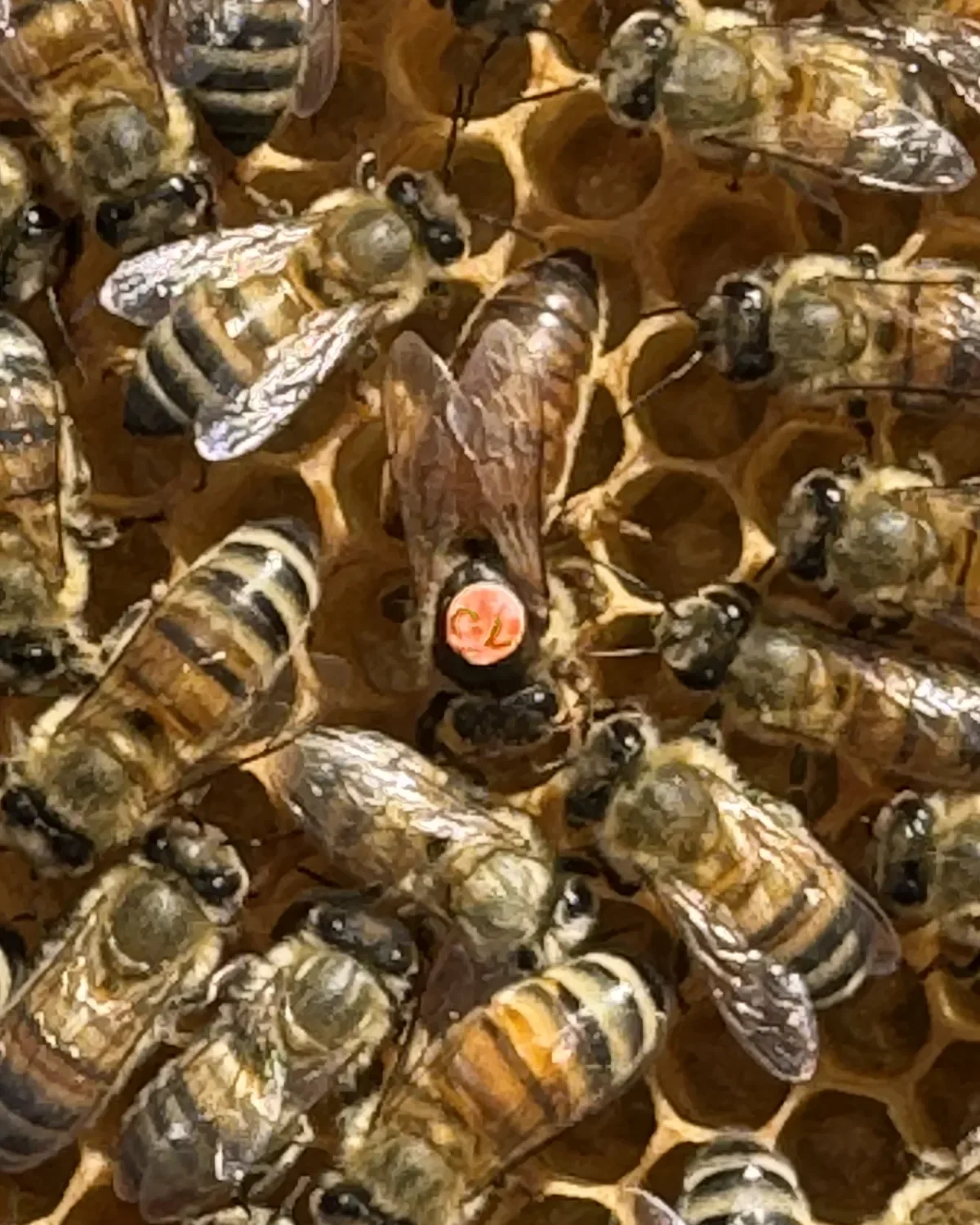
The worker
She cares for the brood, builds comb, processes food and protects the nest. Later, she gathers nectar, pollen, water and plant resins outside. Her tasks change with her age and the colony’s needs.
Bee knowledge from Kassel
At first glance, it is a busy mass of bees. Look more closely and you will discover brood care, food storage, comb building and communication. Come and meet the bees, from a Kassel garden to the heart of the hive.
Living together
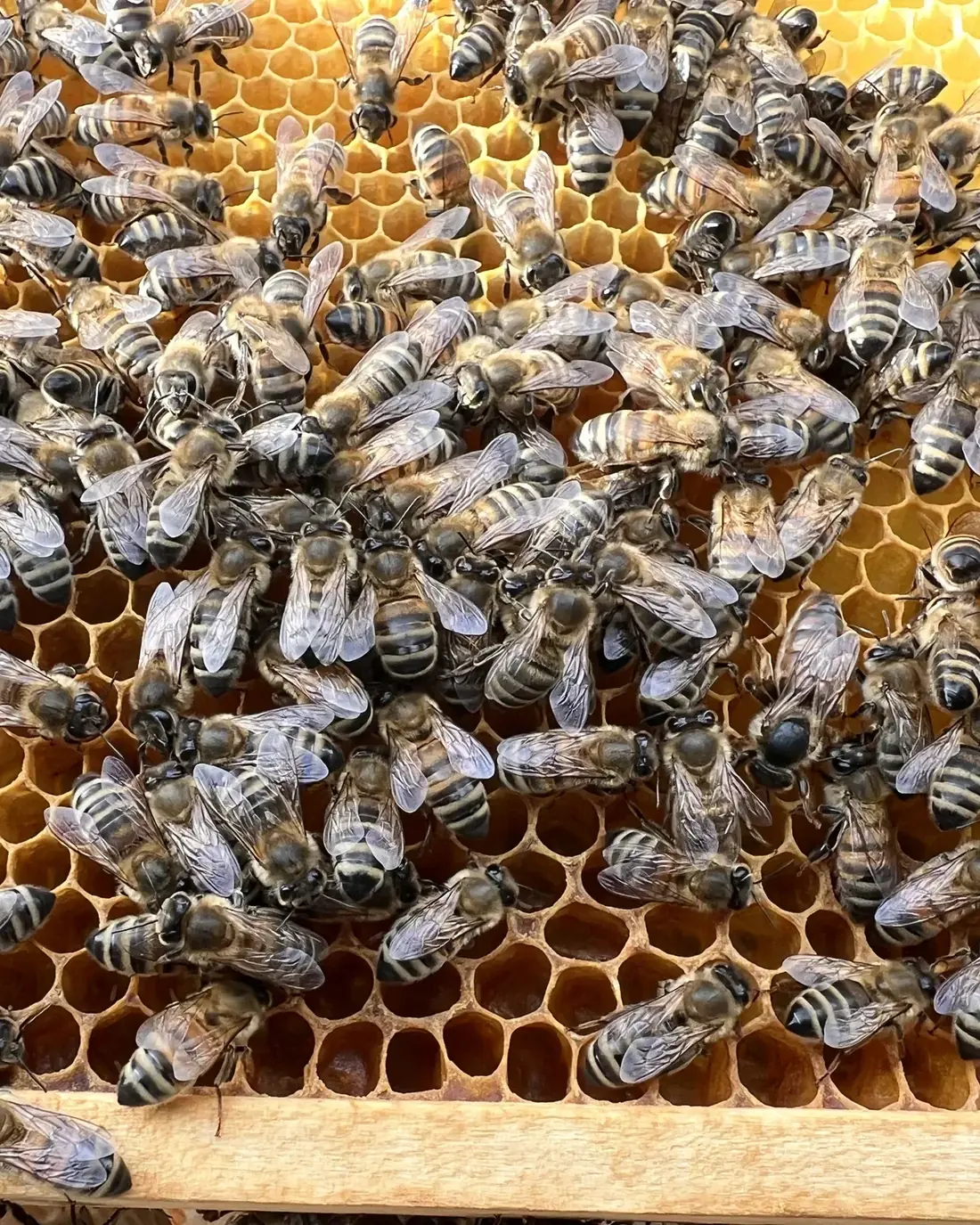
Honey bees live in a community with a division of labour. The queen, workers and drones carry out different tasks.
She cares for the brood, builds comb, processes food and protects the nest. Later, she gathers nectar, pollen, water and plant resins outside. Her tasks change with her age and the colony’s needs.
She lays the eggs for new generations of bees. Her pheromones play a part in the colony’s life together. Despite her name, she is not a ruler who gives orders to every bee.
The drone is the male honey bee. His main role is to mate with a young queen. Unlike a worker, he has no sting.
Background: LWG: bee biology (PDF, in German). You can find more facts in the Comparison of worker, queen and drone.
Comb & communication
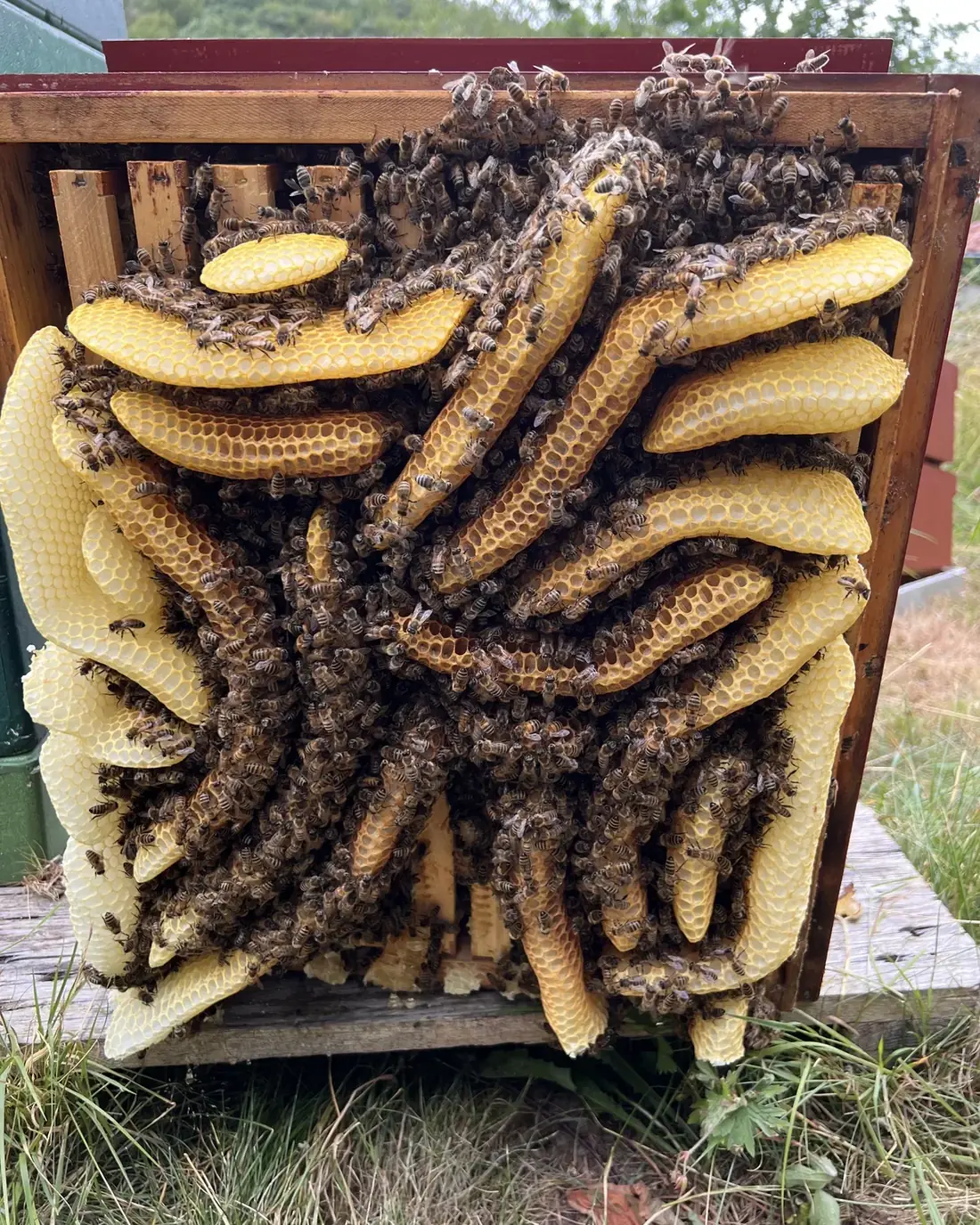
Workers produce wax in glands on their abdomens. They use it to shape the cells of the honeycomb. Brood develops in some cells; others hold pollen and honey.
Food found outside does not remain a secret either. A successful forager can use her waggle dance to share clues about the direction and distance of a food source. This helps other bees find their way.
At the hive entrance, you can glimpse how the bees work together. A look at the comb reveals just how much is happening inside at once.
Scientific background: LWG on bee biology (PDF, in German) and University of Würzburg on the waggle dance (in German).
From the garden to the comb
A bee does not bring ready-made honey back from a flower. Only through the work of many bees does gathered nectar become a food store.
A forager takes up nectar and carries it in her honey stomach. Honeydew can also be the starting point for honey.
In the hive, the gathered food is passed to other bees. The bees’ own enzymes alter its composition.
The bees reduce the water content. The developing honey becomes more concentrated and is stored in the comb cells.
The bees seal ripe honey with wax caps. These stores feed the colony when food is scarce outside.
Specialist sources: LWG: how nectar and honeydew become honey (PDF, in German) and LAVES: honey bees – pollination – pollen – honey (in German).
Through the seasons
What you can observe at the apiary in Kassel changes throughout the year. The weather, available flowers and the colony’s condition all help shape the rhythm.
With the first mild days, activity at the hive entrance increases. The queen lays more eggs, and young workers emerge to gradually replace the winter bees. The brood nest grows, increasing the need for food.
The bees gather nectar and pollen from willows, fruit trees and other spring flowers. Pollen is particularly important for rearing the brood. Cold spells can temporarily slow development.
In suitable weather, there is plenty of flight activity. Foragers bring nectar and pollen into the hive, while other workers care for the brood and turn the incoming nectar into honey. In the process, they remove water from it.
Many colonies are particularly strong in early summer. Swarming is also part of natural reproduction: some of the bees leave with the old queen and establish a new colony.
The transition to the cold season begins as early as late summer. The queen lays fewer eggs, the brood nest shrinks and bee numbers fall. Long-lived winter bees develop to carry the colony through the cold months.
Foragers are still out on warm days. Sufficient food stores and healthy bees are especially important now: they lay the foundations for overwintering and the start of the following spring.
From the outside, the apiary often seems quiet. Inside the hive, however, the bees remain active: in cold weather, they draw together in a winter cluster and generate warmth through muscle activity.
The energy for this comes from the stored food. Honey bees do not hibernate. On mild, sunny days, they may even take short cleansing flights to defecate outside the hive.
Specialist sources: LWG: beekeeping through the year (in German) · LAVES: how honey is made (in German) · LAVES: cleansing flight (PDF, in German). These stages are a guide, rather than a fixed calendar.
Help Kassel bloom
A balcony, a garden or a small area of unsealed ground can provide food or nesting opportunities. It is worth thinking beyond honey bees.
More ideas: LWG: habitats for wild bees and honey bees (PDF, in German).
Many wild bees live solitary lives rather than in large colonies. A nesting aid with tubes is intended for certain cavity-nesting wild bees, rather than for a honey bee colony. Food and suitable habitats remain just as important as the nesting site.
Build nesting aids that help →
Background: LAVES on wild bees and their nesting sites (in German).