Bee knowledge · The facts explained
Worker, queen
and drone.
What are the roles of the three types of honey bee? Find clear, factual explanations of development times, the division of labour and life in a honey bee colony.
The original story Read “Three Lives. One Colony.” on Bienenleben.info →
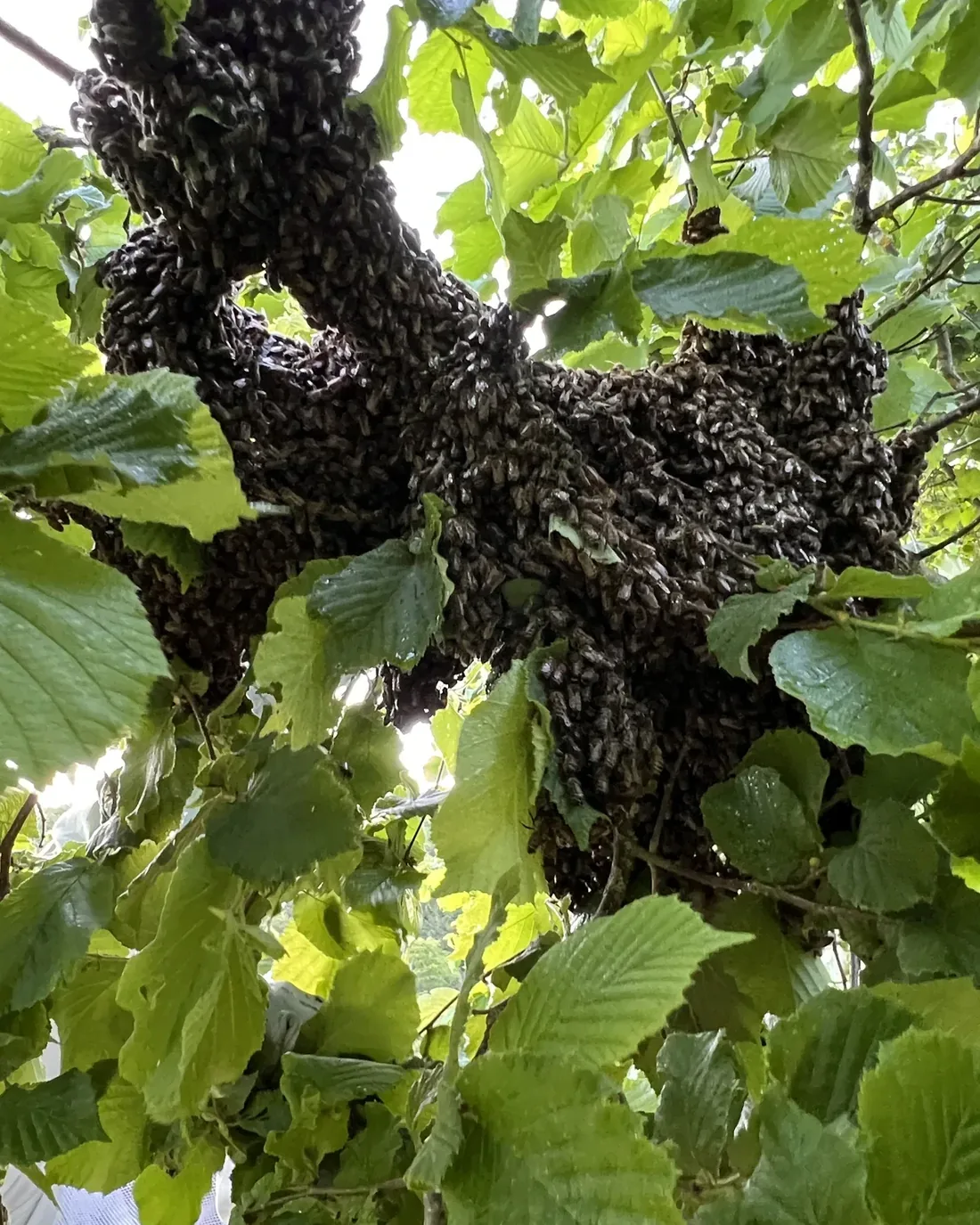
Introduction
A beehive is not a little kingdom.
The name “queen” can easily be misleading. There is no ruler sitting on a throne in the hive. There are no orders, no timetable and no single bee with an overview of the whole.
Order arises in a different way: through smells, touch, food, temperature, sounds, dances and the colony’s immediate needs. A young worker responds to brood that needs care. A forager communicates where she has found a rich food source. The queen produces offspring and contributes to social stability through her pheromones. Drones carry the colony’s genetic material out into the surrounding area.
No single bee can carry out all these tasks. Only the division of labour turns many bees into a community capable of surviving over time.
At a glance
The three types of honey bee compared.
Workers and queens are female and develop from fertilised eggs. The path a female larva takes is influenced mainly by the amount and composition of her food during the larval stage. A future queen is also reared in a special queen cell. The male drone, by contrast, develops from an unfertilised egg.
Development times are counted from the day the egg is laid. They are typical values under normal conditions in a honey bee colony.
| Feature | Worker | Queen | Drone |
|---|---|---|---|
| Sex | female | female | male |
| Development | fertilised egg | fertilised egg | unfertilised egg |
| Time to emergence | around 21 days | around 16 days | around 24 days |
| Main role | Care, building, protection and foraging | Reproduction and social stability | Passing on genetic material |
| Typical lifespan | usually a few weeks in summer; several months as a winter bee | several years possible | usually limited to the warmer months |
| Distinctive features | Wax glands, pollen-collecting structures and a sting | long abdomen and fully developed ovaries | large compound eyes, a powerful body for flight and no sting |
I · The worker
A life that grows with its tasks.
Most of a honey bee colony is made up of workers. They are not interchangeable helpers with just one job. A worker’s place of work changes repeatedly throughout her life: first deep in the brood nest, later around the stores and at the entrance, and finally out in the landscape.
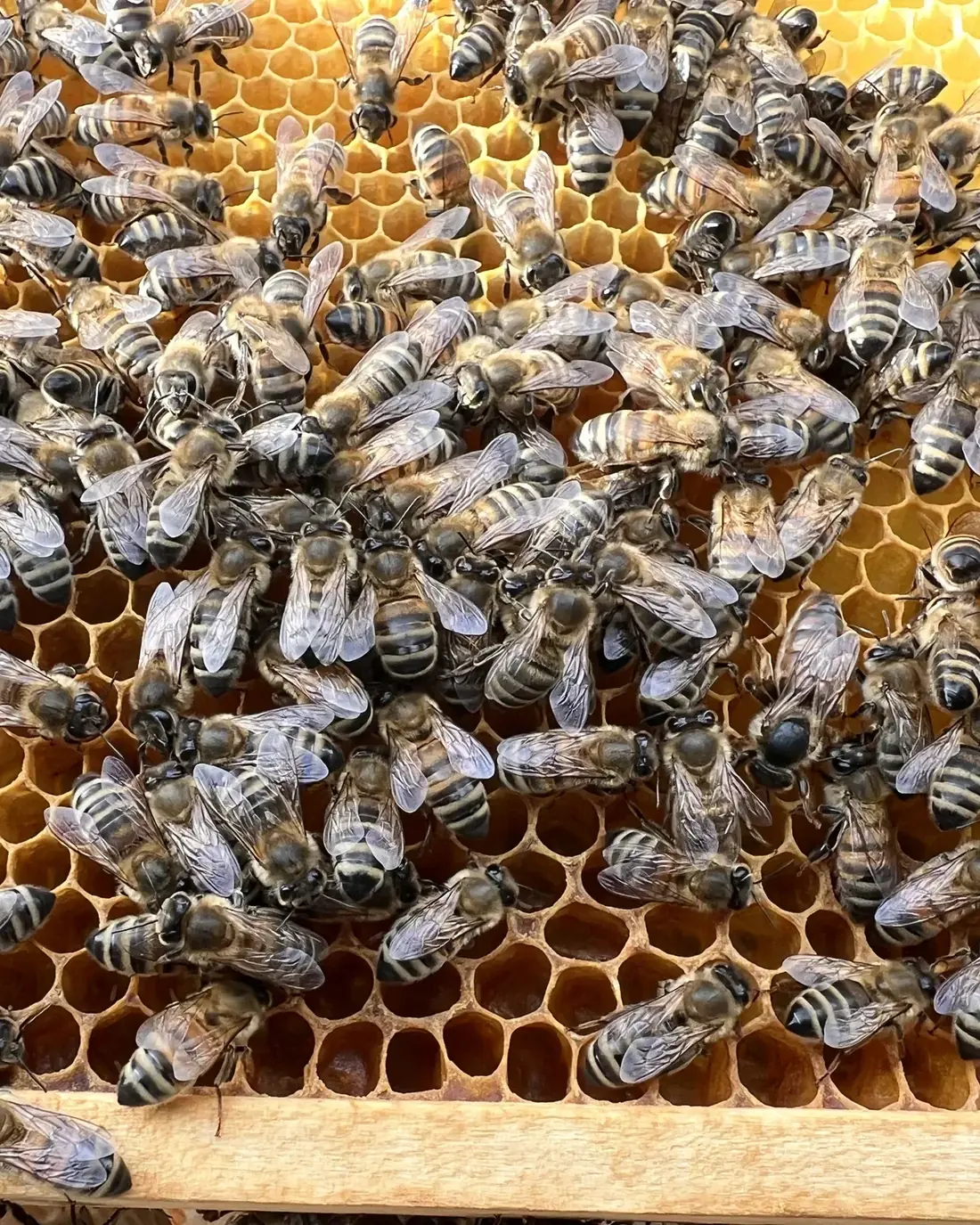
From egg to emergence: around 21 days
It starts with a tiny fertilised egg in a hexagonal cell. After around three days, a larva hatches. It cannot yet do anything for itself and is cared for by nurse bees.
The larva grows quickly and moults several times. Around nine days after the egg is laid, workers seal her cell with a porous wax cap. Behind it, a complete transformation begins: the soft larva first becomes a pupa, and legs, wings, antennae, compound eyes, glands and a sting develop. Around 21 days after the egg is laid, the young worker chews through the cell cap and emerges.
The first days: cleaning, warming, preparing
Her adult life does not begin with a flight into the sunshine. At first, the young bee remains in the sheltered interior. She cleans cells that can then be used again to rear brood or store food. Together with other workers, she also helps keep the brood area at a stable temperature.
A basic principle of the colony is already apparent here: tasks are not rigidly tied to a particular calendar day. Age and physical development suggest a typical sequence, but current needs can shift it. If nurse bees or foragers are missing, for example, other workers respond to fill the gap.
Nurse bee: caring for the next generation
In the next stage of life, glands in the worker’s head become particularly well developed. She now feeds young larvae with brood food. For this, the colony needs pollen in particular as a source of protein, as well as nectar or honey for energy.
Throughout her larval development, a future queen receives especially generous amounts of queen food, usually called royal jelly. The workers are doing more than producing food. Through their care, they influence the developmental path a female larva takes.
Builder bee: wax from her own body
Later, the wax glands on the underside of her abdomen become active. They produce tiny wax scales. The worker picks them up with her legs, works them with her mouthparts and adds them to the comb.
This creates the hexagonal cells in which the colony rears brood, stores pollen and keeps its honey reserves. The comb is a nursery, a larder and a supporting structure all at once.
How nectar becomes honey
Returning foragers carry nectar to the hive in their honey stomachs. There, they pass it to other workers. During this processing, the bees add their own enzymes. At the same time, much of the water must leave the still-watery nectar.
The bees spread the nectar through the cells and circulate air through the hive. Only when the store has ripened sufficiently is it sealed with a thin layer of wax. What we later call honey is, above all, stored energy for the colony, especially for times when little or nothing is flowering outside.
Guard bee: checking the hive entrance
As workers grow older, their work moves towards the outside. At the entrance, guard bees use smell to check who belongs to the colony. They respond to unfamiliar bees and other possible intruders.
The sting is used for defence. A worker does not use it indiscriminately: stinging a human or another mammal can be fatal for her. In that moment, protecting the colony matters more than the individual bee’s continued life.
Forager: out into the landscape
After around three weeks as an adult bee, outside work usually begins. The worker gathers nectar, pollen, water and plant resins, which are used to make propolis in the hive. Before her first long flights, she learns the surroundings of the hive through orientation flights.
Outside, she follows scent, colour, experience and the position of the sun. Once she has found a worthwhile source, she can share the information in the hive. During the waggle dance, the direction and duration of her movements give clues to the direction and distance. The quality of a source also influences how persistently it is promoted.
The dance is not a map in the human sense. It invites other foragers to explore a particular direction, right there in the dark hive on a vertical comb.
When finding a home becomes a shared decision
When a colony becomes strong and space is limited, it can reproduce by swarming. The existing queen leaves the hive with some of the workers. At first, the swarm often gathers in a sheltered spot.
Experienced scout bees search for possible new homes. They assess features including space, shelter and the entrance. Back at the swarm, they dance to promote their discovery. Other bees investigate the suggested sites. Many inspections and responses eventually produce a shared direction.
Summer bees and winter bees
A worker making long foraging flights every day in summer often lives for only a few weeks. The intensive work puts considerable strain on her wings and body.
In late summer and autumn, longer-lived winter bees develop instead. They do not have to move straight into foraging, build up greater reserves in their own bodies and can live for several months. Without them, the colony could neither survive the cold season nor care for new brood in spring.
There is therefore no single life story for a worker. The season and the colony’s condition help determine whether her path will be short and full of flights, or longer and shaped by winter.
II · The queen
A female egg takes a different path.
A queen does not begin as a special “queen egg”. Like a worker, she develops from a fertilised egg. The crucial difference lies in how she is reared.
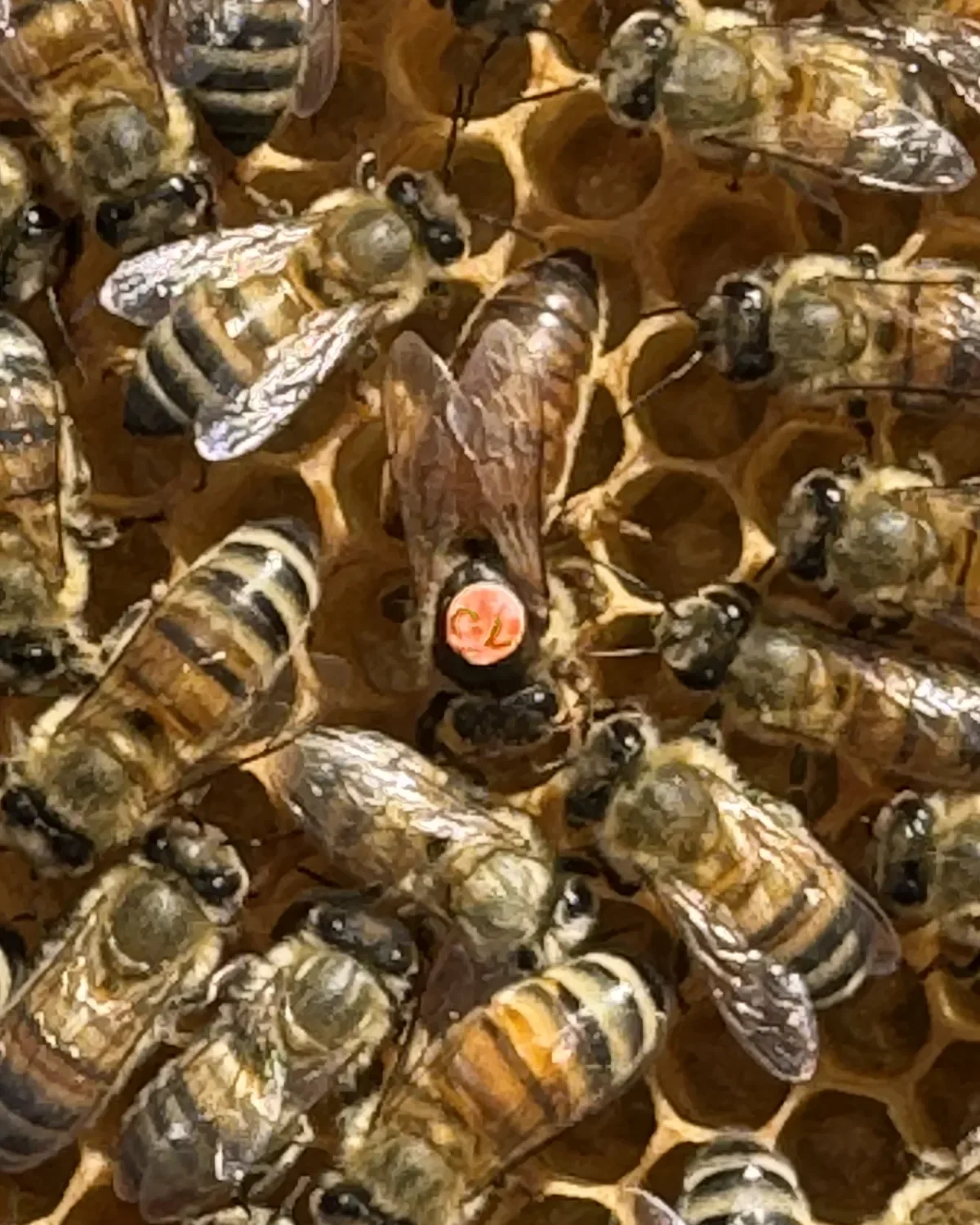
A special cell, special food
A future queen grows in a larger queen cell that opens downwards. Throughout her larval stage, she receives plenty of royal jelly. This rearing allows her reproductive organs to develop fully.
She develops more quickly than a worker or a drone. The young queen emerges around 16 days after the egg is laid. She is now physically developed, but not yet ready to lay eggs.
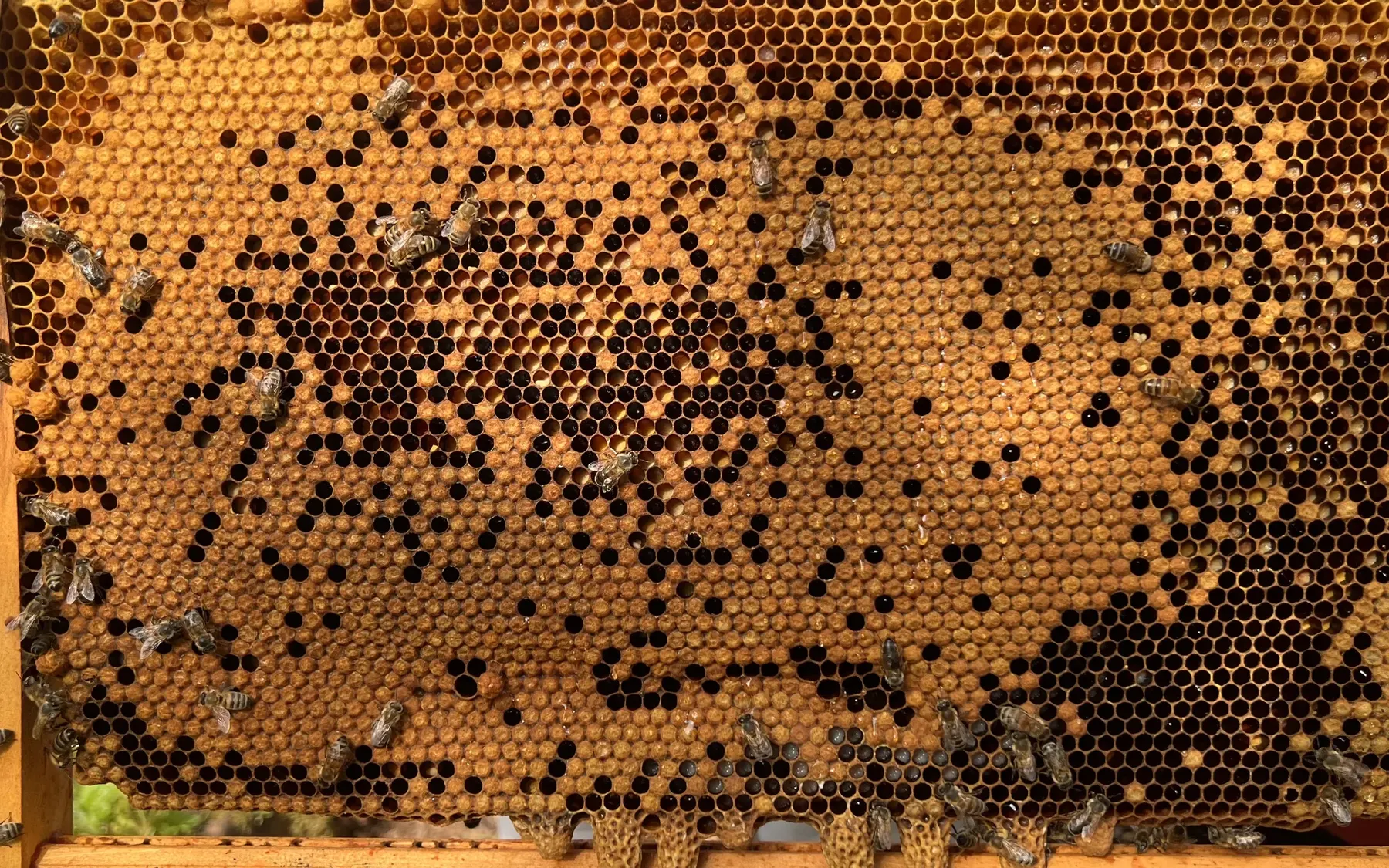
The few flights of her life
First, the young queen learns her surroundings. Later, she flies to drone congregation areas. There, she mates in flight with several drones from different colonies.
She stores the sperm received in a special organ called the spermatheca. This reserve can be enough to fertilise her eggs for years. Once this mating phase is complete, an egg-laying queen normally leaves the hive only when the colony swarms.
The next generation, egg by egg
During periods of strong growth, the queen lays large numbers of eggs. As she lays, her body can control whether an egg is fertilised with stored sperm.
- Fertilised eggs develop into workers or, when reared accordingly, new queens.
- Unfertilised eggs develop into drones.
The queen is therefore the mother of most bees in the colony. Alone, however, she could neither rear brood nor gather food. Workers feed, clean and accompany her, and spread her pheromones throughout the colony.
Part of a network, rather than a ruler
Queen pheromones help bees sense the condition of their colony. Among other things, they signal the presence of a queen. This is different from a system of commands: the queen does not assign tasks or decide the colony’s fate on her own.
If her performance declines or she is lost, workers can rear a successor from suitable young female larvae. When a colony swarms, too, preparations for a new queen in the original colony begin long before the swarm leaves.
A longer life, but a dependent one
A queen can live for several years. Even so, her life remains vulnerable. She may fail to return from a mating flight, be insufficiently mated, fall ill or be replaced by the colony.
Her special position therefore does not mean independence. She can exist only through cooperation with her daughters. The workers need her ability to reproduce; the queen needs their food, care, warmth and protection.
III · The drone
An investment in the future of other colonies.
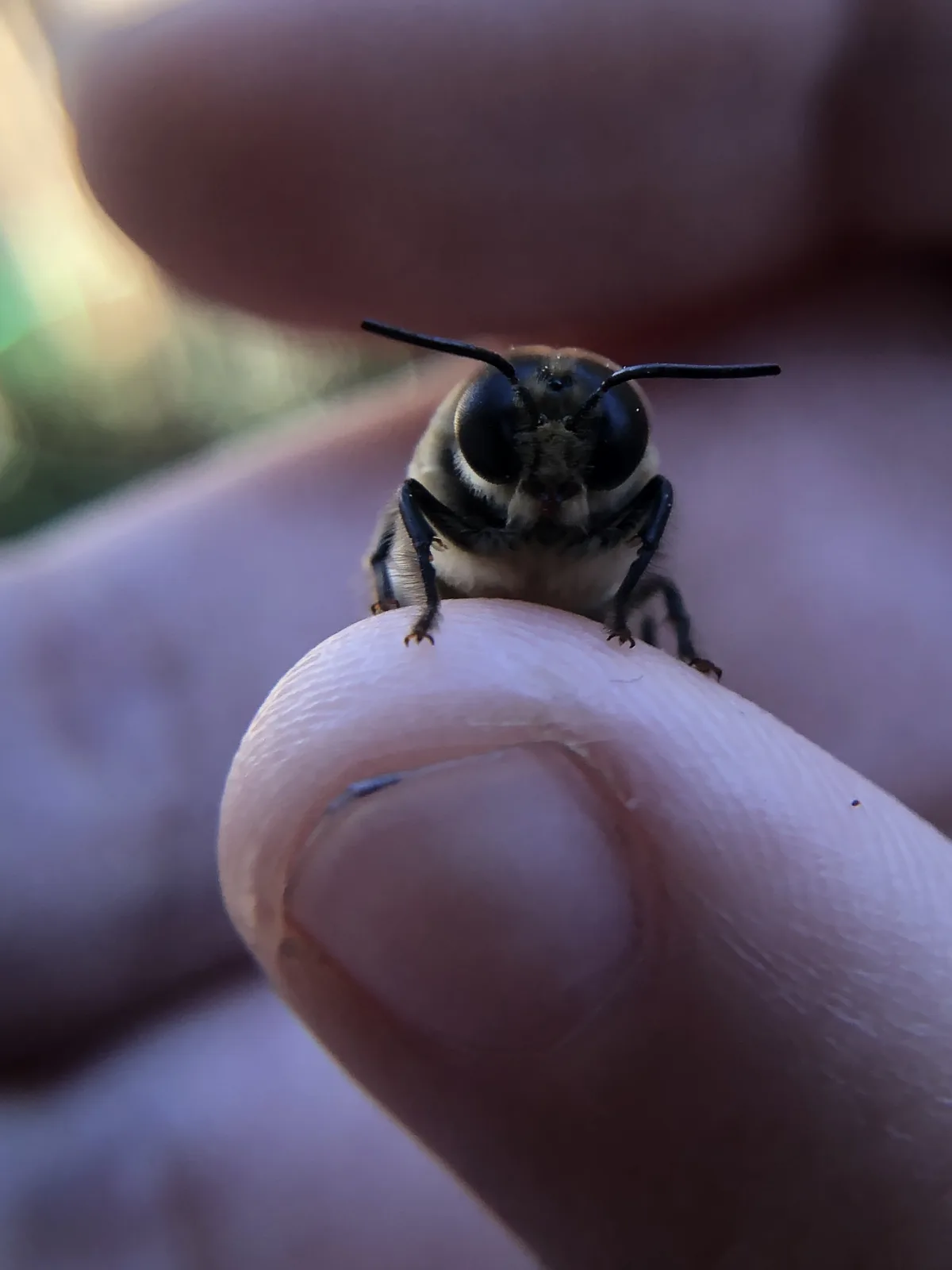
Drones look strikingly large and rounded beside the slimmer workers. They have no sting, gather neither pollen nor nectar and take no part in comb building. This has given rise to the widespread image of a useless freeloader.
Biologically, however, his role is clear: the drone carries his mother’s genetic material beyond the colony and can pass it on to a young queen when mating.

A bee without a father
The drone develops from an unfertilised egg. He therefore has just one set of chromosomes, all inherited from his mother. Put simply, he has a mother but no father.
His larva grows in a slightly larger cell. On the comb, the domed caps of sealed drone brood can usually be distinguished easily from the flatter worker brood. The adult drone emerges around 24 days after the egg is laid.
A body built for flight
After emerging, the drone still needs time to reach sexual maturity. He lives on the colony’s stores and does not gather his own food outside. His large compound eyes, powerful thorax and flight muscles are adapted to finding young queens.
In suitable weather, he flies to areas known as drone congregation areas. Drones from many colonies gather there. Young queens also visit these areas during their mating flights.
Success and death in the same moment
When a drone succeeds in mating, his life ends in the process. His mating organ is torn from his body, and the drone dies shortly afterwards.
For the individual drone, this is a fatal success. For the honey bee population, however, mating means passing on and mixing genetic material. Because a queen mates with several drones, genes from different colonies become part of her future offspring.
When summer ends
Not every drone reaches a queen. As long as there is enough food and mating is possible, drones are cared for within the colony. Their situation changes as food becomes scarcer and the colony prepares for winter.
Workers then often deny them access to the stores and drive them out of the hive. This eviction of the drones may seem harsh, but it reflects the colony’s seasonal economy: there are no young queens to mate with in winter, and the available stores must be enough for the overwintering community.
The drone does not go through a succession of different jobs. His life is focused on a single reproductive task. This specialisation makes him both important and dispensable, depending on the stage the colony has reached in the bee year.
Life together
The colony endures.
Worker, queen and drone can each be described separately. Yet they can only be understood as parts of a community.
A queen without workers could not feed her brood. A worker without a colony would have neither a protective nest nor shared stores. Without the colony’s care and food, drones could not grow to reach their mating flights. Each role depends on the others.
One organism, many bodies
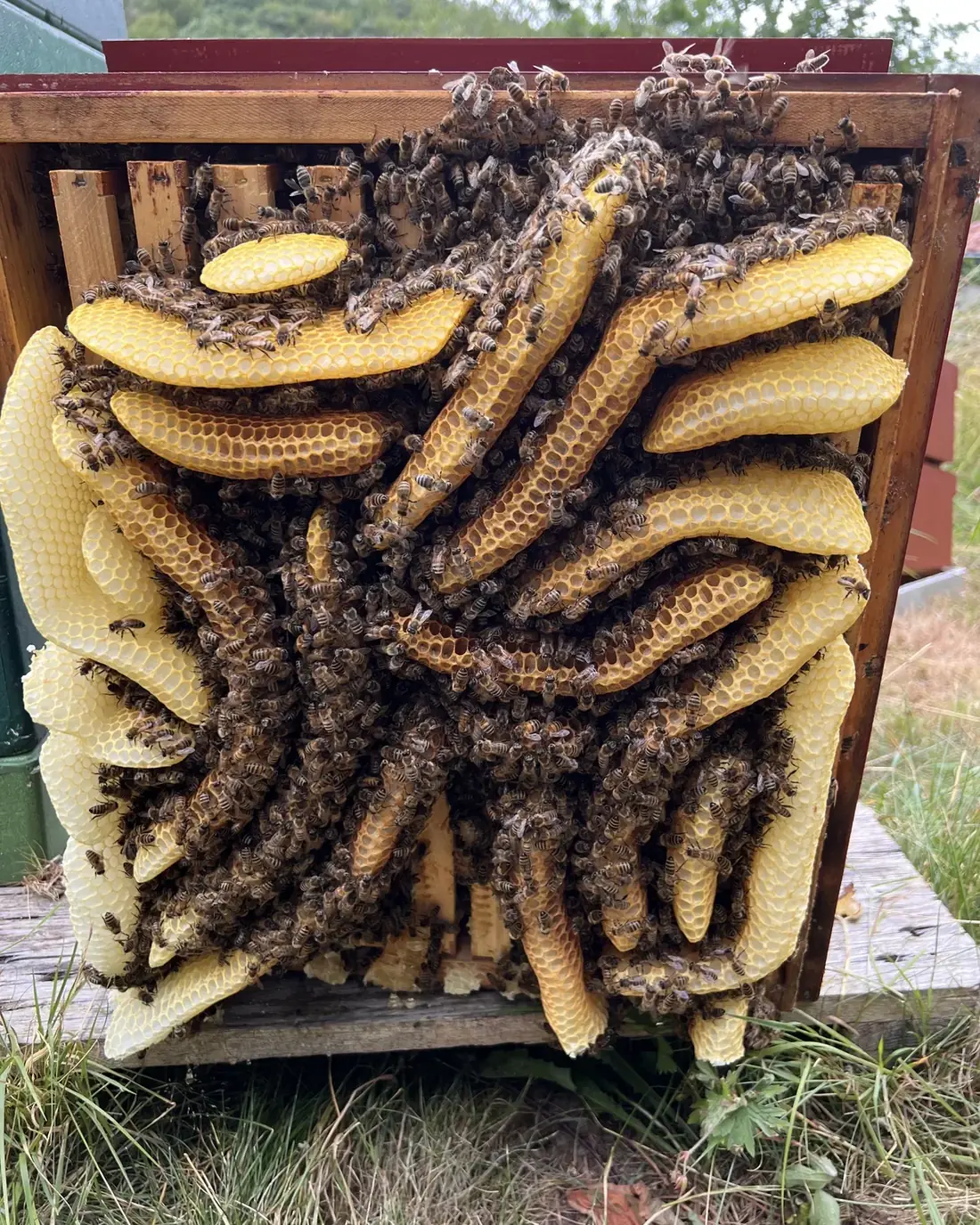
Specialists often describe a honey bee colony as a superorganism. This does not mean that the individual bee is unimportant. It means that essential achievements emerge only at the level of the whole colony.
Thousands of workers regulate the temperature together. They carry food, water and information. They replace lost bees, care for brood and respond to changes in the hive. No single bee knows an overall plan. Yet the system remains capable of responding.
The rhythm of the year
The colony grows in spring. The queen increases her egg-laying, young workers care for the brood and foragers bring in pollen and nectar. Later, drones and possibly new queens develop. A strong colony can divide by swarming.
In summer, work outside the hive reaches its peak. Nectar is brought in and made into honey. Meanwhile, brood care, comb building, cooling and guarding continue inside.
As the days grow shorter, the brood nest shrinks. Drones disappear from the colony, and long-lived winter bees take the place of the shorter-lived summer workers.
In winter, the workers form a dense cluster around the queen. They generate heat through muscle activity and move slowly along their stores. The colony does not sleep; it reduces its activity and maintains the internal conditions that allow it to survive.
As the days grow longer, the cycle begins again. The queen starts laying more eggs. New workers replace the old winter bees. Later, new drones emerge. While generations of workers come and go, a queen may experience several of these yearly cycles. The colony continues through the cooperation of its generations.
How this shows up in a jar of honey
A jar of honey is therefore never the work of a single bee. It represents countless foraging flights, the transfer and ripening of nectar, the regulation of warmth and humidity, and a landscape whose flowers change with the weather and the seasons.
The worker gathers and processes food. The queen makes new generations possible. The drone carries genetic material beyond his colony’s boundaries. Their lives are different, yet inseparably connected.
Context & transparency
Author and sources.
About the author
Philipp Ballier is a hobby beekeeper in Kassel. Together with his son Johannes, he cares for honey bee colonies in Kassel and northern Hesse. Their work combines practical observation at the apiary with a desire to explain what happens within a colony in a clear and engaging way.
This version was independently structured and written for Honig aus Kassel. The original, more literary version can be found on Bienenleben.info: “Three Lives. One Colony.”.
Editorial note: Development times and age-related stages are typical guides. Temperature, season, the colony’s condition and its current needs influence development and the division of labour.
Scientific background
- Bavarian State Institute for Viticulture and Horticulture: bee biology (in German)
- LAVES, Celle Institute for Apiculture: honey bees – pollination – pollen – honey (in German)
Editorial information current as of August 2026.