Building & positioning a bee hotel

A good spot
for wild bees.

A small nesting aid can make a lovely garden project. What matters is neatly finished nesting tunnels, suitable materials and the right position. Here you can find out what to look for.

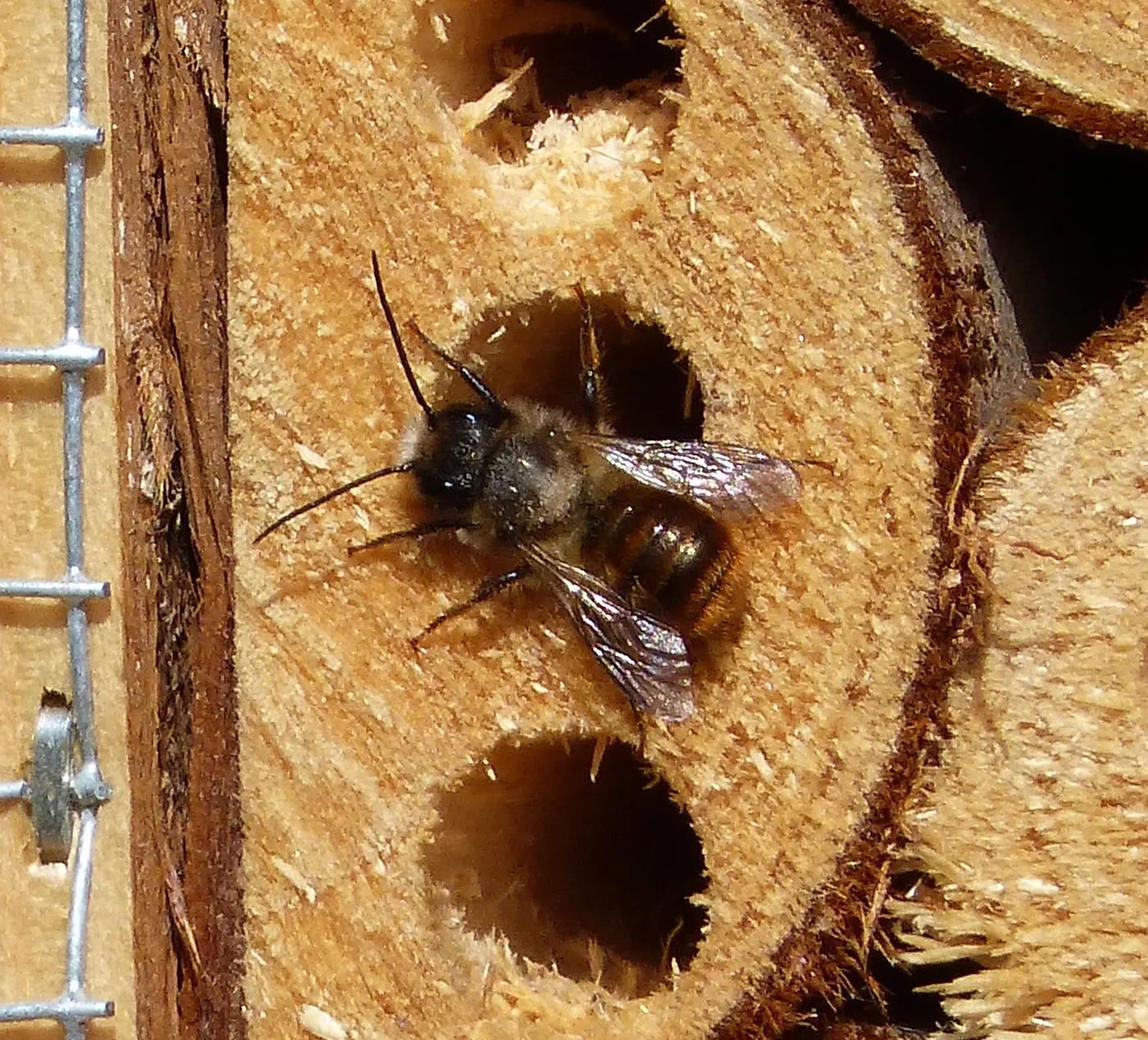
Red mason bee at the entrance to a nesting tunnel
A look at the residents: a red mason bee at a nesting tunnel.Photo: gailhampshire / Wikimedia Commons, CC BY 2.0 · Cropped, WebP.

Meet the residents first

For wild bees, rather than honey bees.

Most wild bee species live solitary lives: a female builds her own nest. A nesting aid with tubes supports certain species that use existing cavities. Honey bees, by contrast, live in colonies and do not move into such tubes.

Many wild bees nest in the ground or need other habitat features. An “insect hotel” therefore cannot replace a varied habitat; it is one contribution, and a good place to observe them.

Background: LWG: diversity in the garden, pages 52–53 (PDF, in German) and LAVES on different nesting sites (in German).

Materials & workmanship

Two tried and tested approaches.

You do not need a large house with lots of compartments. Start with a manageable module whose nesting tunnels you can make carefully.

Hollow stems

Reed or bamboo.

  • Choose dry, intact tubes with a range of internal diameters.
  • Make clean cuts and remove splinters from the entrances and inside the tubes.
  • A bamboo node can close the back end. It must not sit in the middle of the usable tunnel.
  • Fit the tubes horizontally and securely into a sheltered frame.

Dimensions and workmanship: LWG building guide (PDF, in German).
Drilled nesting tunnels

Seasoned hardwood.

  • Use dry, untreated hardwood, such as beech, ash or oak.
  • Drill into the side of the block, rather than the cut end where the growth rings are visible.
  • Use a range of diameters, do not drill right through, and smooth the entrances and inner walls.
  • Remove drilling dust and do not use cracked wood.

Materials and drilling direction: LAVES: nesting opportunities for wild bees (in German).

“Side grain” does not mean drilling along the grain.

This means the side of the beam or log. Drill across the grain from that surface. Holes drilled into the end grain, where growth rings are visible, can easily split; cracks can let moisture into the brood tunnels.

Scientific basis: LWG building guide, page 3 (PDF, in German).

When sawing and drilling, make sure the workpiece is securely clamped and wear suitable eye protection. Children should work with an adult’s support.

The right spot

Sunny. Dry.
Securely mounted.

Sun

Choose a sunny spot sheltered from the wind. Facing south is a useful guide.

Rain protection

An overhanging roof or a sheltered house wall keeps driving rain away from the entrances. The tunnels must stay dry.

Stability

Screw or fasten the nesting aid securely so that it does not sway. Keep the entrances freely accessible.

Positioning advice: LWG: diversity in the garden, page 53 (PDF, in German).

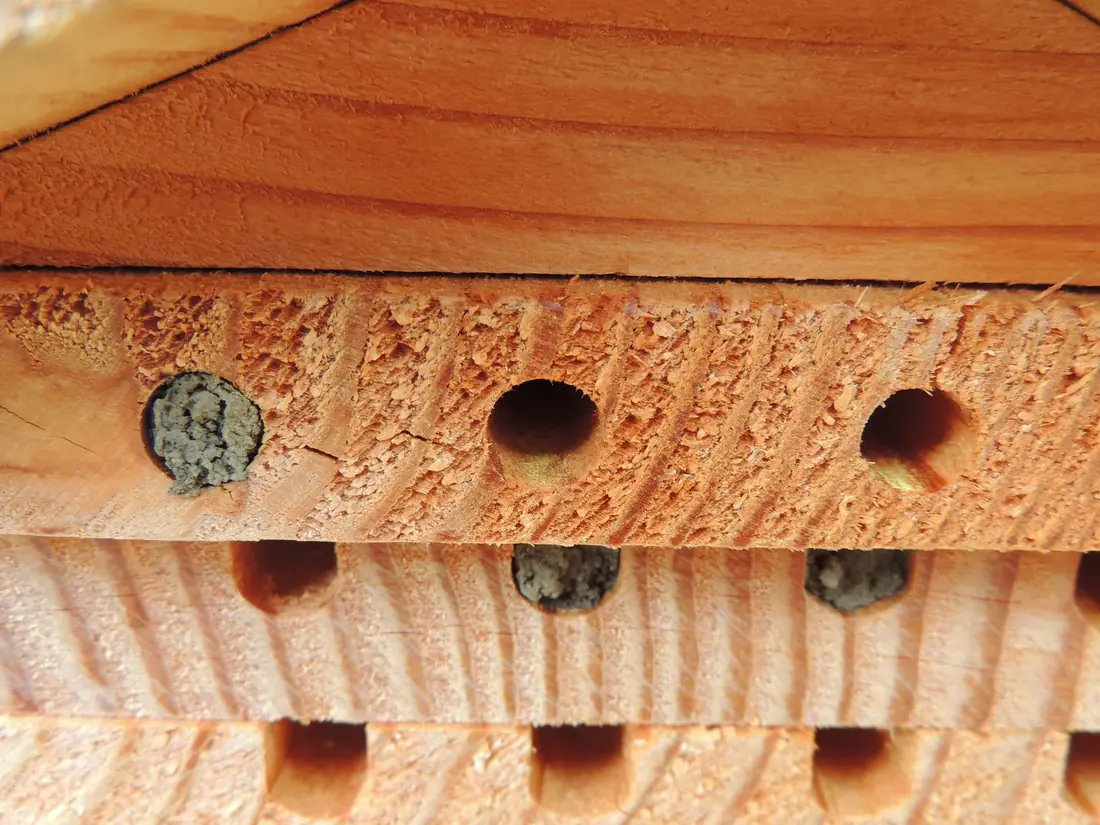
Nesting tunnels in wood with open entrances and sealed nests
The sealed entrances show that these nesting tunnels are occupied. Please do not open them.Photo: Orangeaurochs / Wikimedia Commons, CC BY 2.0 · Cropped, WebP.

Observe & care

A sealed tunnel is not an invitation to clean.

The next generation may be developing behind a sealed nest entrance. Do not open occupied tubes or poke anything into them. Instead, check the mounting and rain protection from the outside.

Leave it outside in winter too.

Leave the nesting aid intact in its sheltered position; do not bring it into a warm house. Many residents will not emerge until the following spring. Clean or replace used tubes only once the brood has definitely emerged and left; if in doubt, leave the nesting tunnel untouched.

Overwintering: LWG: diversity in the garden (PDF, in German). Care after emergence: LWG building guide, page 4 (PDF, in German).

Avoid common buying mistakes

Not every filled compartment is a nesting place.

Pine cones, loose straw and ordinary perforated bricks are not a universal solution for wild bees. Frayed tubes and cracked wood slices are not helpful either. When buying, focus on the quality of the usable nesting tunnels, rather than the number of decorative compartments.

These should not be confused with purpose-made nesting aids made of fired clay, which can provide suitable, neatly finished nesting tunnels.

Assessing materials: LAVES on suitable and unsuitable filling materials (in German).

More than a building project

Flowers nearby matter too.

Plan for nectar and pollen from spring through to autumn. Native wild perennials and single flowers are a good starting point. A balcony can also play a part.

Where suitable, leave patches of bare ground, dead wood and dead stems in the garden. These provide opportunities for species that cannot use a house of nesting tubes.

Ideas: LWG: making gardens and balconies insect-friendly (in German).

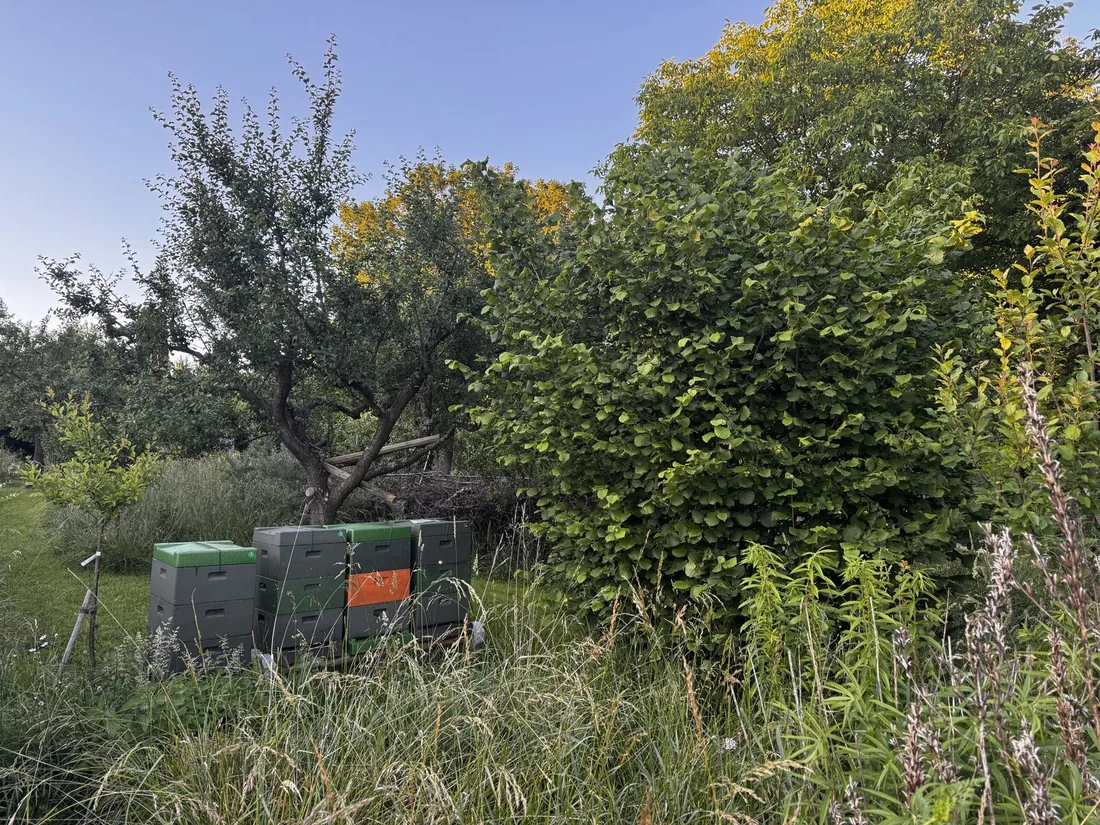
Green garden surroundings at the apiary in Kassel-Kirchditmold
The garden setting: our apiary in Kirchditmold. The photograph does not show a wild bee nesting aid.